Form a Nevada LLC
 Business Formation
 Registered Agent Service
 Tax ID / EIN
 Legal Services
 Start up Coach
 Taxes and Bookkeeping
 Business Credit




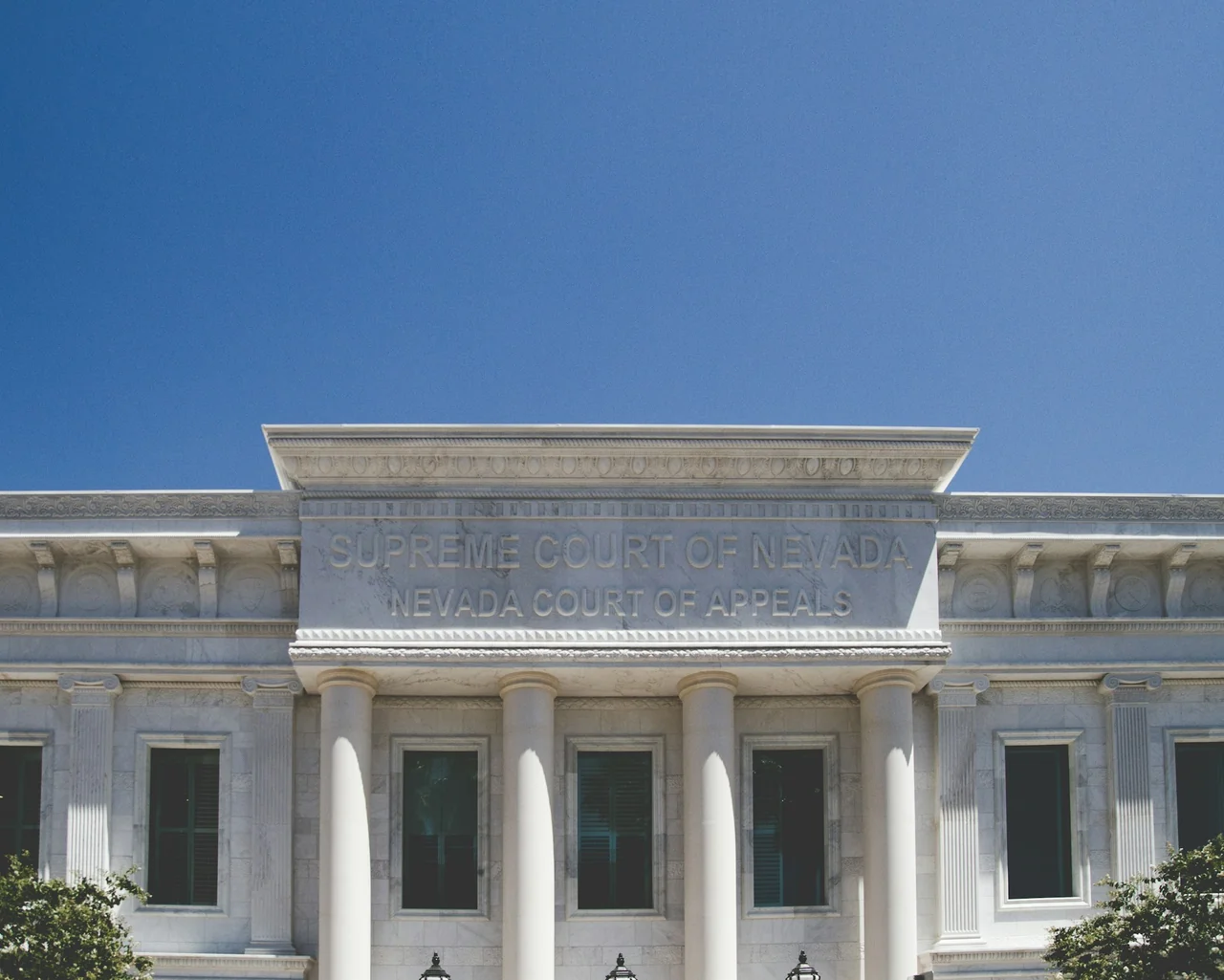


Nevada, known for its business-friendly tax climate and strong liability protections, continues to set the standard for corporate governance in the United States.
Since 2023, the Silver State has enacted several major amendments to its limited liability company (LLC) and corporation laws that significantly impact business operations. That said, understanding the implications of these amendments and adapting your strategy accordingly is important.
This blog explores the latest amendments to Nevada's corporation and LLC laws and their various implications.
Key Takeaways
- Recent amendments to Nevada’s business laws strengthen the state’s position as a business-friendly jurisdiction by changing and clarifying rules on governance for corporations and LLCs and liability protection for stockholders.
- Assembly Bill No. 126 (AB 126) amended specific rules for important procedures such as:
- Approving reverse stock splits
- Changing a corporation’s name
- Correcting inaccurate filings
- Managing stockholder requests for inspecting books and records
- Assembly Bill No. 239 (AB 239) clarified certain provisions specified in some of Nevada’s previously amended corporation laws, including those governing approvals of reverse stock splits. It also made several changes to the record-keeping, dissolution, and foreign qualification requirements of LLCs.
- Business owners should review these recent amendments to Nevada’s corporate laws and update their governing documents and procedures to protect their businesses from legal risks.
Start your Nevada LLC in
24 hours guaranteed
You don't need to live in Nevada to enjoy the best asset protection and audit defense a Nevada LLC can provide.
An Overview of the Changes to Nevada’s Business Laws
Over the past three years, Nevada’s business laws were amended twice. These changes are outlined in Assembly Bill No. 126 (AB 126) and Assembly Bill No. 239 (AB 239), which we discuss below.
Assembly Bill No. 126
Sponsored by Assemblyman Duy Nguyen and state Sen. Rochelle Nguyen, Nevada’s AB 126 made several major amendments to Title 7 of the Nevada Revised Statutes (NRS), which governs business entities such as corporations and LLCs. The bill was approved by the Nevada Legislature and Gov. Joe Lombardo on May 30, 2023.
The Amendments Made By AB 126
Some of the most notable changes that AB 126 brought to the NRS are:
An Amended Voting Standard For Reverse Stock Splits
The bill provides public-traded corporations relief regarding the stockholder voting standards for a reverse stock split.
A reverse stock split is a crucial measure for public companies that allows them to reduce the number of outstanding shares in the market. It's an effective strategy that allows corporations to keep their listings on a national stock exchange. But to do this, the company must obtain the "majority of the outstanding voting power" vote as required by NRS 78.2055. The same rule applies even if most responsive stockholders support the split.
Fortunately, AB 126 has removed the "majority of the outstanding voting power" requirement, replacing it with the same voting standard corporations use for stockholder voting. This way, public companies with non-responsive stockholders can preserve their exchange listing.
Note: AB 239 clarified the changes made to the voting standard for reverse stock splits. Under NRS 78.2055 and 78.207, reverse stock splits from any adversely affected class or series can be approved with a vote of the stockholders of such class or series. Previously, approvals of reverse stock splits required a majority vote.
Clarifications & Enhancements Regarding Inspections of Financial Records
According to NRS 78.257, stockholders with at least 15% of outstanding shares can inspect certain corporate records.
AB 126 clarifies this statute, indicating that stockholders with statutory rights of inspection can request access to "books of account and financial statement of the corporation."
The bill also authorizes a corporation's board of directors to require stockholders to enter and comply with a confidentiality agreement "having such terms and scope as are reasonably related to protecting the legitimate interests of the corporation" before the inspection.
Lastly, AB 126 also identified the standards for imposing penalties on corporations that fail to comply with the inspection requirements.
Corporate Name Changes
Existing Nevada corporation laws make name-changing difficult for corporations. As per NRS 92A.180, corporations can only change their names without a stockholder vote through a short-form merger with a wholly-owned subsidiary.
This approach can be time-consuming. So, as a solution, AB 126 amended NRS 78.390 to allow corporations to amend their articles of incorporation with the approval of their board of directors. This way, they can change their names without needing stockholder approval.
However, it's worth noting that if the company's articles of incorporation explicitly prohibit such amendments without stockholder approval, the initial requirement will remain.
Correcting Erroneously Filed Records
AB 126 also clarifies the scope of NRS 78.0295, which allows Nevada corporations to correct certain inaccurate or defective records filed with the Office of the Nevada Secretary of State.
According to the amendment, corporations can now correct clerical errors in filings and inaccurate filings. This includes filings made using the wrong form, which should not have been made in the first place.
The same revisions were made to corresponding statutes for LLCs and other business entities.
The Scope of "Poison Pill" Defensive Measures
AB 126 clarifies the actions that a company's board of directors can use when adopting arrangements or plans.
It specifically states that while the law doesn't stop directors from taking action to protect the company or its shareholders, it also doesn't give them the right to go against other Nevada laws. This is especially true when changing the terms or powers of shares already authorized or sold.
The main point of these revisions is to allow the use of "poison pill" defense strategies, which companies typically use to defend themselves from hostile takeovers. Under this new amendment, businesses can adopt poison pill defense strategies without fear of violating Nevada's corporation laws.
Informational Statements For Uncertificated Shares
Before the enactment of AB 126, corporations were required to send annual information statements containing information that would otherwise be included in stock certificates to stockholders with uncertificated shares.
The bill's amendments eliminate this burdensome administrative obligation by indicating that informational statements for uncertificated shares be delivered to stockholders within a reasonable timeframe after issuance or within 10 days after the holder submits a request.
Other Amendments Under AB 126
There are other notable changes that AB 126 made to NRS Chapter 78, which governs Nevada’s corporations, such as:
- Clarifying NRS 78.242 to provide more specific guidelines regarding under what circumstances a restriction on transfer will be binding on a share transferee.
- Eliminating a potential conflict in NRS 92A.133 that allows a third party to conduct a tender offer and subsequent merger without stockholder approval
- Bringing attention to the requirement of giving a written statement to stockholders with uncertificated shares and providing parameters to reflect the corporations' practices concerning NRS 78.235.
Assembly Bill No. 239
AB 239 contains the most recent amendments to the Nevada Revised Statutes. The Nevada Senate voted to adopt this bill on May 21, 2025, which was approved by Gov. Joe Lombardo on May 30, 2025.
According to a memorandum by the State Bar of Nevada’s Executive Committee, Business Law Section on AB 239, the proposed amendments aim to:
- Clarify specific conditions cited by state law.
- Respond to practice considerations, requests or comments from other attorneys, and recent changes to the business laws in other states.
What are the Major Amendments Made By AB 239?
The major amendments made by AB 239 to Nevada’s corporation and LLC laws cover the following:
The Fiduciary Duties & Liability of Controlling Stockholders
Under NRS 78.240, a corporation’s stockholders have no fiduciary duties to the business or its stockholders, unless they meet certain conditions. The amendments made to this law states that controlling stockholders must avoid compelling a director or officer to breach their fiduciary duty that:
- Holds them legally liable under state law
- Involves a contract or transaction where the controlling stockholder or their affiliates or associates participates in or holds a material and nonspeculative financial interest (This gives the controlling stockholder a material, nonspeculative, and non-ratable financial benefit that proves disadvantageous to other stockholders.)
The second condition mentioned above is similar to Delaware’s definition of a “controlling stockholder transaction,” although the latter requires a “financial or other benefit” gained by only the controlling stockholder.
Furthermore, any contract or transaction involving a controlling stockholder won’t be considered a breach of their fiduciary duty if it’s approved by a committee of only disinterested directors or the board of directors who took the committee’s recommendation. Delaware’s business laws enforce a similar set of conditions.
Finally, NRS 78.240 can help reduce a stockholder’s personal liability to the corporation, its stockholders, or creditors, as long as they’re not a controlling stockholder, the aforementioned presumption has been disproved, and they haven’t breached their fiduciary duty.
A Waiver for Jury Trials
AB 239 also amended NRS 78.046 to allow a corporation to include an enforceable waiver for jury trials on any “internal action” defined by state law. This change was intended to reassure potentially relocating businesses that they would gain the right to a jury trial in Nevada.
Provided Materials Considered Part of Notices
Under NRS 75.150, any materials provided with a notice or other correspondence is considered part of the forwarded communication to determine whether a stockholder was properly notified under state law and the sender’s “organic rules.”
This amendment is Nevada’s response to Activision Blizzard’s case in Delaware that questioned whether the materials included in stockholder notices are considered part of those notices.
Approval of Agreements By the Board of Directors
NRS 78.315(5) was also amended under AB 239. It now permits the board of directors of a Nevada corporation to approve, adopt, or otherwise act upon a completely or considerably finalized document. The change is presumed to be a response to the recent amendments to Delaware’s corporate laws.
References to External Facts or Events in Voting Agreements
Under NRS 78.365, voting agreements can require that the stock of all involved parties be voted using an approach or procedure influenced by a fact or event that can be determined outside of the agreement. This condition only applies if the agreement specifies the chosen approach or procedure.
Corporations Restructuring Through Holding Companies
Another set of amendments made by AB 239 covers NRS Chapter 92A. Specifically, they allow a Nevada corporation to form a parent holding company for restructuring and issue the new company’s shares to stockholders in exchange for their shares in the existing corporation. The process can be done without stockholder approval and under certain conditions set by the corporation.
Still, the amended law includes a restriction on corporations planning to restructure by establishing holding companies. These businesses shouldn’t take this action to avoid the provisions of Nevada’s acquisition of control share or business combination laws.
Finally, the corporation and its new holding company must include clauses about majority ownership, common management, and voting requirements in their governing documents. These provisions should be added and enforced for at least two years after the corporation’s restructuring.
Record-Keeping, Dissolution, & Foreign Qualification for LLCs
AB 239 also made significant changes to Nevada’s LLC laws, which are summarized in the table below.
| Statute | Amendment(s) |
|---|---|
| NRS 86.241 | All LLCs must keep a current list of the full name and current home or business address of each of their members and managers. |
| NRS 86.490 | At least two-thirds of a manager-managed LLC’s organizers or managers can file articles of dissolution with the Nevada Secretary of State before the business starts operating and if it hasn’t issued ownership interests to its members. A Nevada LLC’s articles of dissolution must declare that: The company is managed by one or more managers. The LLC hasn’t started operating in the state. The business hasn’t issued ownership interests to members. |
| NRS 86.531 | An LLC’s articles of dissolution must contain the following information: The company’s name A declaration that the dissolution has been approved, required under NRS 86.491, or ordered by a district court under NRS 86.495 The effective date and time of the dissolution, which must be set: When the LLC filed its articles of dissolution; or At the date and time specified in the document (The exact date of dissolution must “not be more than 90 days after the date on which the articles of dissolution are filed.”) |
| NRS 86.544 | A foreign LLC’s application for registration must include the name and home or business address of each of its managers or members. |
Frequently Asked Questions
The major changes to Nevada’s corporation and LLC laws include:
- Clarifications to a stockholder’s fiduciary duty and liability
- An updated level of approval for reverse stock splits
- Revised rules for procedures such as corporate record inspections and corporate name changes
AB 239 affects Nevada corporations by updating and adding rules on areas such as a stockholder’s fiduciary duties, the materials included in stockholder notices, and the approval of agreements by a corporation’s board of directors. These amendments clarify previously established standards for corporations and introduces new rules to entice more companies to operate in Nevada.
AB 239 updated several of a Nevada LLC’s record-keeping, dissolution, and foreign qualification requirements. For example, the state now requires LLCs to keep an updated list of the full names and current home or business addresses of their members and managers.
Yes, Nevada’s rules on a controlling stockholder’s liability changed. State law now specifies when controlling stockholders may face personal liability. AB 239 introduced clearer rules to help corporations determine whether a stockholder breached their fiduciary duty to the business.
Under the amended NRS 86.241, Nevada LLCs must keep an updated list of the full name and current home or business address of each of its members and managers. Their other record-keeping requirements remain unchanged.
AB 126 changed reverse stock split requirements by amending the voting standards for this process. But as of 2026, publicly traded Nevada corporations need a vote from the stockholders of an adversely affected class or series to do reverse stock splits.
Yes, Nevada corporations can change their names without stockholder approval. An amendment to NRS 78.390 states that a corporation’s board of directors can approve any name change.
Yes, Nevada corporations can correct inaccurate filings. Under NRS 78.0295, they can correct clerical errors such as filings that were submitted using the wrong form.
Stockholders with at least 15% of outstanding shares of a Nevada corporation are allowed to inspect the company’s books of account and financial statements. Additionally, they may need to sign and adhere to a confidentiality agreement to protect the corporation’s legitimate interests.
Yes, Nevada LLC owners should update their internal records. This step ensures that their businesses meet the state’s current requirements and maintain their level of liability protection.
Set Up a Nevada LLC for Your Business Today
The recent amendments made to Nevada’s corporate laws show the state’s commitment to becoming one of the country's leading destinations for incorporation and LLC formation. By adapting its legislation to the changing needs of corporations and LLCs, Nevada created an environment where businesses could thrive and grow.
If you’re opening a Nevada LLC, NCH can help you get it right the first time. We provide a proven, structured process that’s designed to reduce errors, delays, and unnecessary costs. Furthermore, our approach to LLC formation is backed by 32+ years in business and 250,000+ businesses formed, focusing on accuracy, clarity, and long-term support (including ongoing compliance).
DISCLAIMER: The above material has been prepared for informational purposes only, containing opinions of the provider, and is not intended to provide, and should not be relied on for, tax, legal, or accounting advice. Please consider consulting tax, legal, and accounting advisors before engaging in any transaction.